
Executive Summary
Led product management for Dosh from initial concept through launch, building a two-sided cashback marketplace that became the #1 app on both Apple and Android stores. Oversaw the complete product lifecycle - strategy, branding, UX/UI design, and development - for both the consumer mobile app and merchant campaign portal. The initial prototype I helped build raised the company’s first $1M in funding, ultimately leading to $80M raised at a $300M valuation with PayPal as an investor.
The Concept
“Each year, companies spend billions on marketing trying to engender brand loyalty. What if that money went directly to the people who shop there?”
In 2014, company founders Ryan Wuerch and Ed Mock came to Rocksauce Studios with a simple but powerful idea: use linked card technology to create automatic cashback when people shop at participating brands - no coupons, no receipts, no points to track. Just shop and get paid.
My role: translate that vision into a product strategy and working prototype that could demonstrate the concept to investors and merchants.
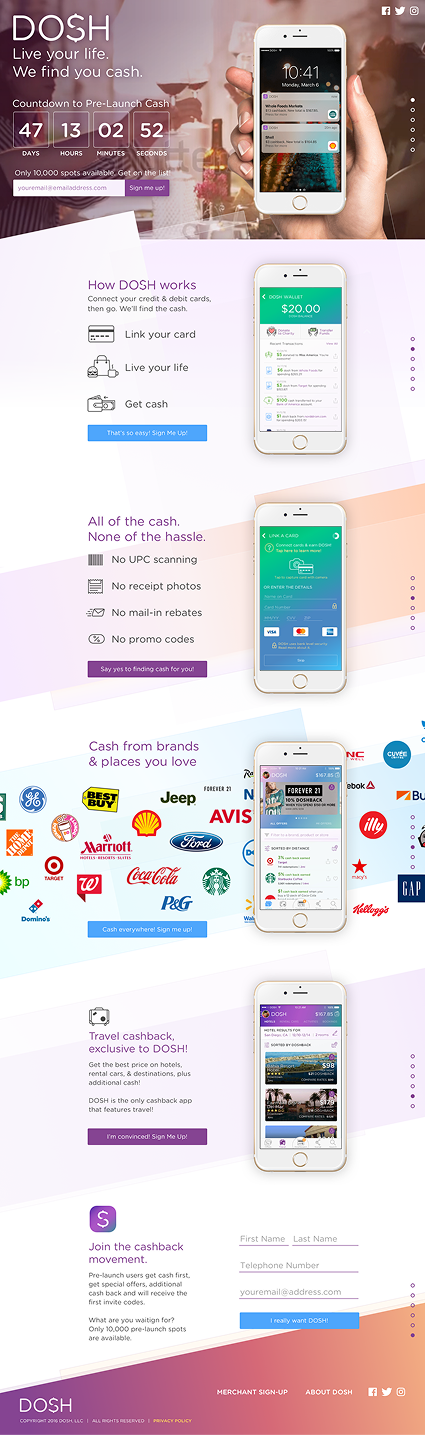 Automatic cashback concept: Link card, shop anywhere, earn instantly
The Consumer Experience
The core user flow had to be dead simple: link your card, shop at partner brands, and receive automatic cashback. No scanning receipts, no uploading photos, no remembering to “activate” offers.
Onboarding & Card Linking Secure card linking via Visa/Mastercard integration. Users could link multiple cards and set primary payment methods. The value prop was immediate: “Get paid to shop at your favorite brands.”
Merchant Discovery Users browse local and national brands offering cashback. Map view shows nearby offers; search and filters help discover new places. Each merchant card displays cashback amount, terms, and featured deals.
Automatic Transaction Detection When users shop at partner brands with linked cards, Dosh automatically detects the transaction and credits cashback within 24–48 hours. No action required from the user.
Wallet & Payouts Cashback accumulates in the user’s Dosh wallet. Once the balance reaches $25, users can cash out to their bank account, PayPal, or Venmo. The payout threshold creates retention (users keep coming back to reach cashout) while staying reasonable.
Referral Program Users earn $5 for every friend who links a card and makes a qualifying purchase. Friends get $5 too. This viral loop drove significant organic growth.
Travel Vertical Dosh was the only cashback app to feature travel bookings with cashback—hotels, rental cars, and destinations. This differentiated the app from competitors and created a high-value use case that drove engagement.
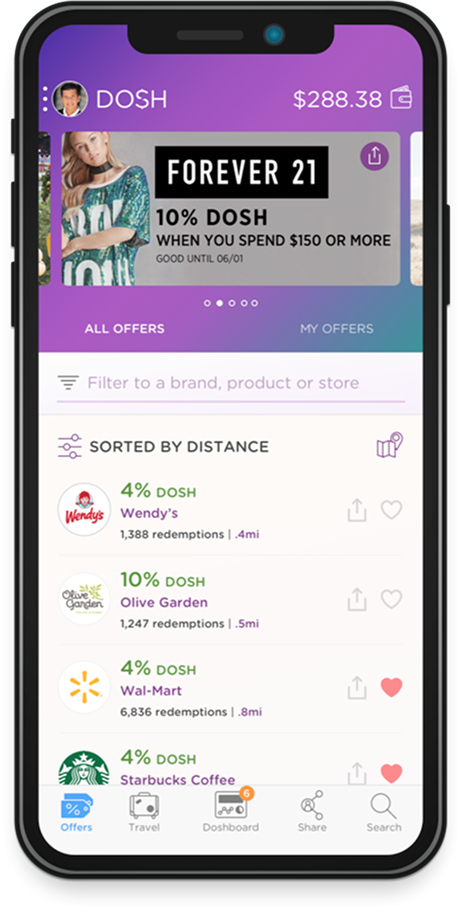 Consumer App: Offers sorted by distance with clear cashback percentages and redemption counts
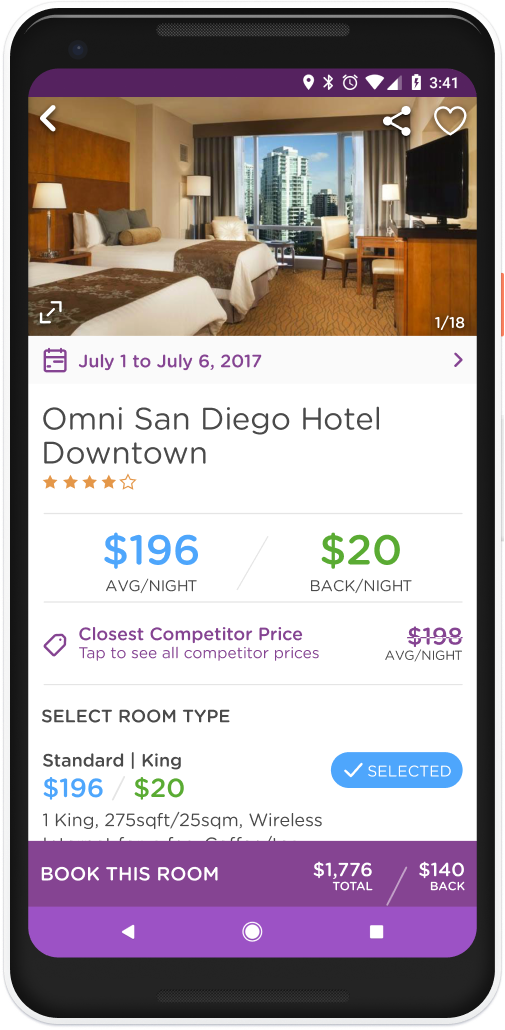 Travel Cashback: $20/night back on hotel bookings with competitor price comparison
The Merchant Portal
For the marketplace to work, merchants needed an easy way to create and manage cashback campaigns. The Merchant Portal gave brands full control over their offers without requiring Dosh support.
Campaign Creation Merchants set cashback amount (percentage or flat dollar), campaign duration, spending minimums, and budget caps. Live preview shows how the offer appears in the consumer app.
Targeting & Segmentation Merchants target campaigns by geography, user segment, new vs. returning customers, or spend thresholds. This allowed sophisticated strategies like “5% back for new customers, 3% for repeat.”
Performance Dashboard Real-time analytics show campaign impressions, redemptions, total cashback paid, average transaction size, and ROI. Merchants optimize campaigns based on actual performance data.
Budget Management & Alerts Merchants set campaign budgets and receive alerts as spending approaches limits. Auto-pause prevents overruns while maximizing exposure.
Brand Partnerships Dosh launched with and scaled to include major national and international brands across retail, dining, travel, and services.
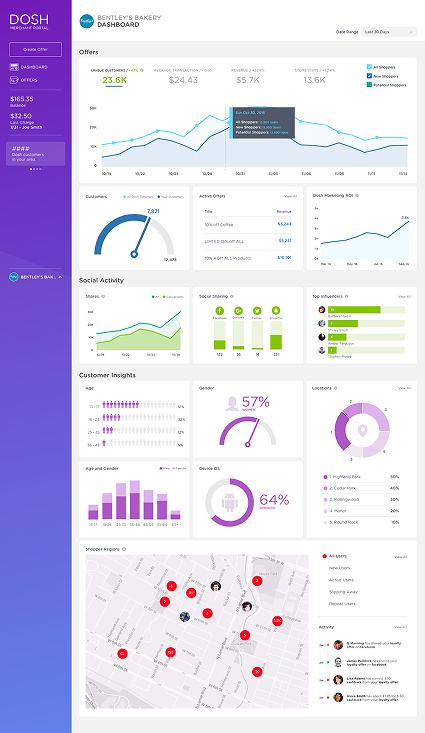 Merchant Dashboard: Campaign performance, customer demographics, location analytics, and ROI tracking
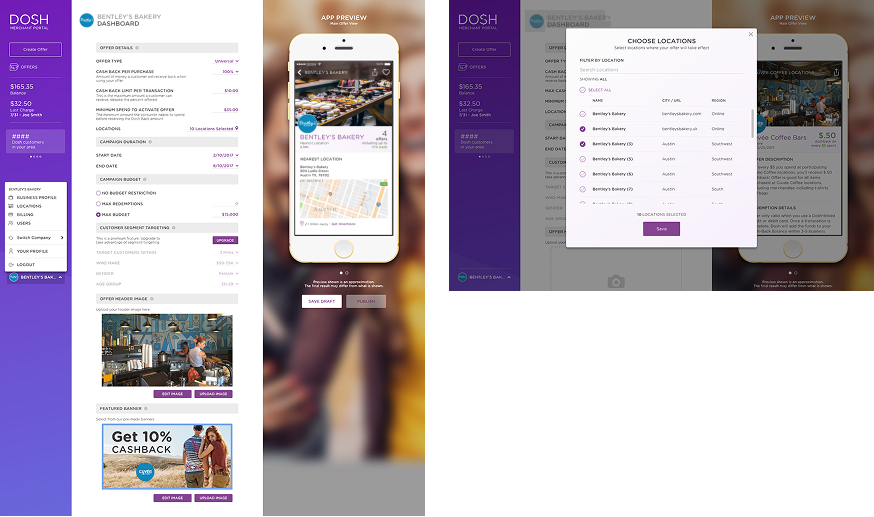 Offer Creation: Campaign builder with real-time app preview (left) and multi-location targeting (right)
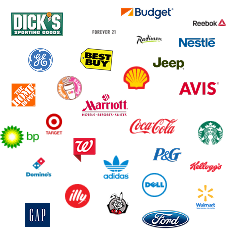 Brand Partners: Target, Walmart, Starbucks, Best Buy, Home Depot, Marriott, Ford, Coca-Cola, P&G, and more
Results
Product Success
- #1 app on Apple App Store
- #1 app on Google Play Store
- 1.5M monthly active users
- 163K daily active users
- 10,000+ pre-launch signups
Business Success
- $80M total funding raised
- $300M company valuation
- PayPal as strategic investor
- Multi-year partnership established
Key Learnings
Two-sided marketplaces require simultaneous product excellence
The consumer app had to be delightful enough to drive adoption; the merchant portal had to be powerful enough to attract brands. Neither could succeed without the other.
Friction is the enemy of engagement
The “no action required at checkout” promise was the core differentiator. Every feature decision had to preserve this simplicity.
Long product cycles require iteration
Three years from concept to launch meant the product had to evolve with changing user expectations. Multiple branding and UX iterations were necessary to hit the market at the right time.
Prototypes unlock funding
The early prototype was essential to communicating the vision in a way that convinced investors. Tangible products raise money; slide decks don’t.
Why This Matters
This case study demonstrates 0→1 product leadership at scale - taking an idea from initial concept through a multi-year development process to a #1 app ranking. It shows the ability to manage two-sided marketplace dynamics, building products for distinct user populations with different needs while maintaining a coherent platform strategy.
The pattern of building a consumer product and a B2B tool that work together - with the consumer side driving adoption and the B2B side driving monetization - applies across industries. Whether it’s cashback apps, marketplace platforms, or B2B2C partnerships, understanding how to serve both sides simultaneously is a critical product leadership skill.